Grams to Cups Converter
Convert grams to cups or cups to grams using ingredient-specific measurements. Choose US, Metric, or Imperial cup sizes and get quick, accurate conversions for common cooking and baking ingredients.
Water Grams to Cups Converter
Convert ingredient weights and volumes with ease.
cups = grams ÷ (density × 236.5882365) — divide grams by the ingredient density (g/mL) and 236.5882365 mL per US cup.Choose US (236.588 mL), Metric (250 mL), or Imperial (284.131 mL) cup. Fractions and tablespoons are rounded for practical use; the decimal value is more precise. US/Imperial tbsp = 1/16 cup; Metric tbsp = 15 mL. Tables and SEO text below use the US cup baseline.
Grams to Cups
Divide the ingredient’s weight in grams by its grams-per-cup value to get the measurement in cups.
Cups to Grams
Multiply the number of cups by the ingredient’s grams-per-cup value to calculate its weight in grams.
Grams per cup vary by ingredient and cup size. Select the correct ingredient and US, Metric, or Imperial cup size for more accurate conversions.
Why Use Our Grams to Cups Converter?
Convert grams to cups or cups to grams with ingredient-specific measurements. Choose your preferred cup size and make everyday cooking and baking conversions easier.
-
Quick and Easy Conversions
Enter an amount, select your ingredient, and instantly convert grams to cups or cups to grams without manual calculations.
-
Ingredient-Specific Measurements
Convert flour, sugar, butter, and other common ingredients using their grams-per-cup values and your choice of US, Metric, or Imperial cups.
-
Mobile-Friendly Tool
Convert cooking measurements on your phone, tablet, or computer with a simple, responsive calculator designed for convenient everyday use.
Popular Grams to Cups Conversions
Convert grams to US cups for common cooking and baking ingredients using approximate ingredient densities and standard cup measurements.
Water
Milk
All-Purpose Flour
Granulated Sugar
Olive Oil
Honey
Note: Conversions use a US cup of approximately 236.588 mL and estimated ingredient densities. Results may vary by brand, moisture content, and packing method.
Popular Cups to Grams Conversions
Find the approximate weight in grams for one US cup of common cooking and baking ingredients.
Water
Milk
All-Purpose Flour
Granulated Sugar
Olive Oil
Honey
Note: Values are approximate and based on US customary cups. Metric and Imperial cup sizes produce different results.
Need a Different Conversion?
Use our converter to calculate grams to cups or cups to grams for different ingredients and cup sizes.
How Grams to Cups Works
Grams measure mass, while cups measure volume. Converting grams to cups depends on the ingredient and the cup size you use. For example, 100 grams of flour takes up a different volume than 100 grams of sugar. Our converter uses ingredient-specific measurements and supports US, Metric, and Imperial cup sizes to help you calculate approximate cup equivalents.
Grams vs. Cups
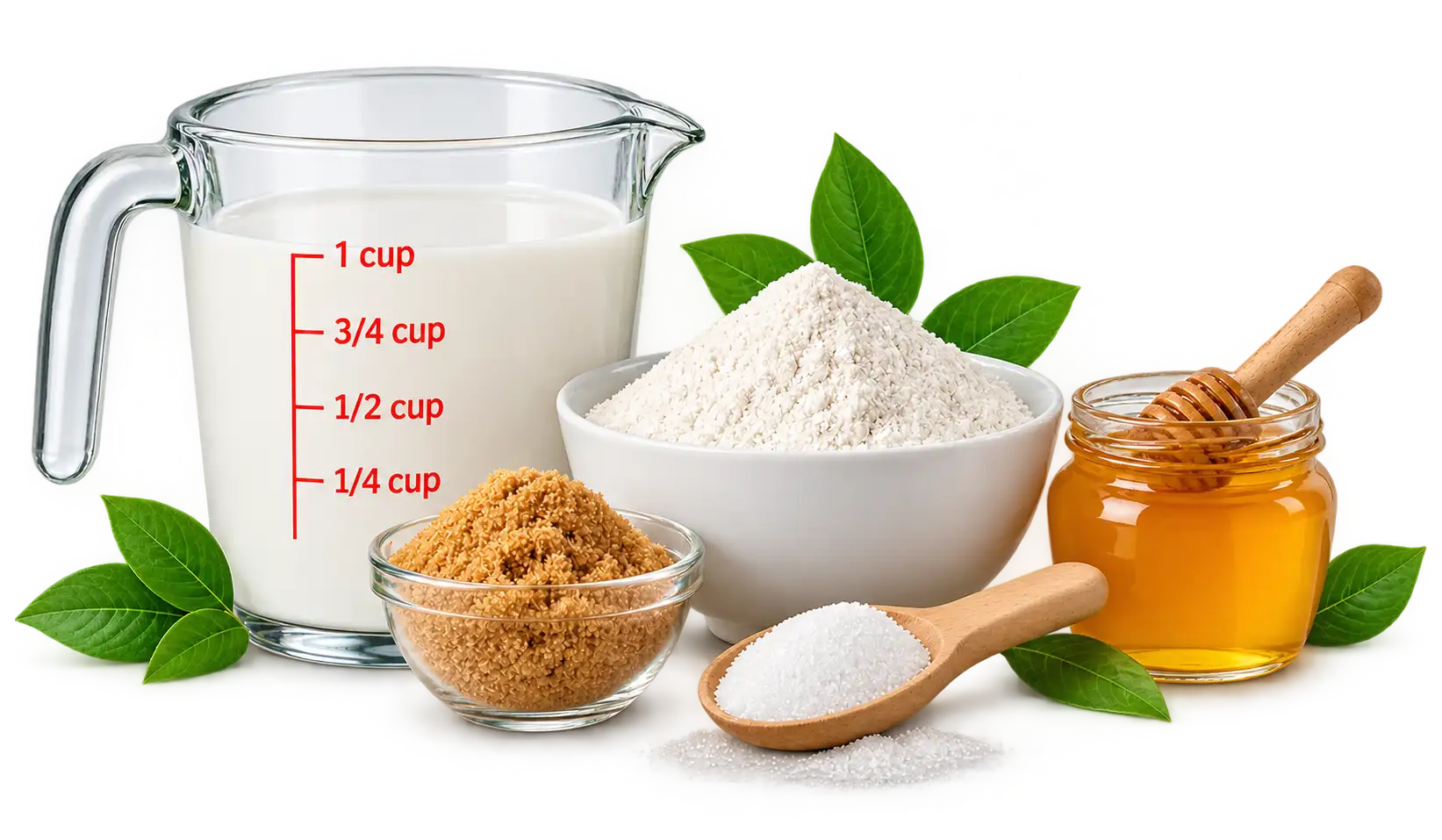
Grams (g) measure mass, while cups measure volume. The number of cups in a given weight depends on the ingredient being measured.
Ingredient-Specific Density
Different ingredients have different densities. Flour, sugar, butter, and water each have a different weight per cup, affecting conversion results.
Choose Your Cup Size
Select US, Metric, or Imperial cups. Cup sizes differ, so choosing the correct measurement standard helps you calculate the right volume.
Get Your Conversion Result
Enter the weight in grams and select your ingredient and cup size. The converter calculates the approximate equivalent in cups for cooking and baking.
Grams vs Cups
Grams measure mass, while cups measure volume.
They measure different things, so converting grams to cups depends on the ingredient’s density and the cup size being used.
Grams (g)
A unit of mass (weight)Grams measure how much an ingredient weighs. They represent the mass of flour, sugar, butter, or other ingredients, regardless of how much space those ingredients occupy.
Cups
A unit of volumeCups measure the volume of an ingredient. A cup holds a specific volume, but its weight in grams changes depending on the ingredient and cup measurement standard.
Common Grams to Cups Examples
See how 1 gram and 100 grams convert to US cups for different cooking and baking ingredients.
| Ingredient | 1 gram (g) equals about | 100 grams (g) equals about | Notes |
|---|---|---|---|
| 💧 Water | 0.00423 cups | 0.423 cups | Water has an approximate density of 1 g/mL. |
| 🌾 All-Purpose Flour | 0.00713 cups | 0.713 cups | Flour is less dense than water. Packing changes its volume. |
| 🍚 Granulated Sugar | 0.00500 cups | 0.500 cups | Granulated sugar is generally denser than flour. |
| 🥛 Milk | 0.00410 cups | 0.410 cups | Milk is slightly denser than water. |
* Values are approximate and based on US customary cups (236.588 mL). Ingredient type, moisture, brand, and packing method can affect conversions.
Grams to Cups Conversions by Amount
Explore grams to cups conversions for common cooking and baking measurements. Select an amount to find its approximate cup equivalent for different ingredients.
50 Grams to Cups
Convert 50 grams to cups for different cooking and baking ingredients.
Open75 Grams to Cups
Find how many cups are in 75 grams using ingredient-specific measurements.
Open100 Grams to Cups
Convert 100 grams to US, Metric, or Imperial cups for common ingredients.
Open125 Grams to Cups
Calculate the equivalent cups for 125 grams of different ingredients.
Open250 Grams to Cups
Find the cup equivalent of 250 grams for popular cooking ingredients.
Open500 Grams to Cups
Convert 500 grams to cups for flour, sugar, butter, and more ingredients.
OpenWhat is Grams to Cups Converter?
The Grams to Cups converter helps you quickly convert ingredient weight in grams into cup measurements. Because different ingredients have different densities, the number of cups in a given weight can vary. Our converter supports US, Metric, and Imperial cup sizes, making it easier to measure flour, sugar, butter, and other common ingredients for cooking and baking.
Popular Grams to Cups Ingredient Guides
Explore ingredient-specific grams to cups conversion guides for flour, milk, sugar, butter, and honey. Find helpful measurements for everyday cooking and baking.
Flour Grams to Cups
Convert flour grams to cups using approximate weight-to-volume measurements. Learn how the spoon-and-level method affects flour measurements.
Open Flour Converter OpenMilk Grams to Cups
Convert milk from grams to cups with approximate density-based measurements and practical liquid measuring tips.
Open Milk Converter OpenSugar Grams to Cups
Convert sugar grams to cups with ingredient-specific values for granulated, brown, and powdered sugar.
Open Sugar Converter OpenButter Grams to Cups
Find approximate cups for butter measured in grams, with helpful conversion guidance for cooking and baking recipes.
Open Butter Converter OpenHoney Grams to Cups
Convert honey from grams to cups using approximate density values, with tips for measuring thick and sticky ingredients.
Open Honey Converter OpenWhat Is a Gram?
A gram (g) is a metric unit of mass used to measure food, cooking ingredients, and other everyday items. One gram equals 0.001 kilograms or 1,000 milligrams. Grams are commonly used in cooking and baking to measure ingredients such as flour, sugar, butter, and salt. Unlike cups, which measure volume, grams measure mass. When converting grams to cups, the result depends on the ingredient’s density and the cup size being used.
Authoritative External References
- GOV NIST – Cooking Measurement Equivalencies
- GOV USDA FoodData Central – Ingredient Data
- GOV BIPM – International System of Units (SI)
- DATA King Arthur Baking – Ingredient Weight Chart
- WIKI Cup (Unit of Volume) – Wikipedia
- WIKI Gram (Unit of Mass) – Wikipedia
- WIKI Density (Mass per Unit Volume) – Wikipedia